
Venezuela
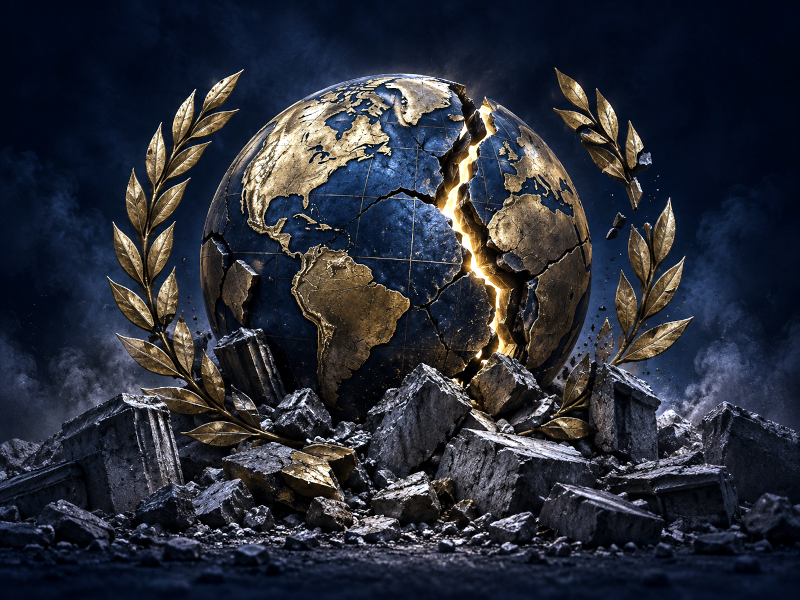
An earthquake can bring down buildings. It can also tear away a government’s stage scenery. In Venezuela, it did both: it turned entire neighbourhoods of La Guaira into mountains of concrete and exposed a political structure that had been cracking long before the ground began to shake.
Official figures report more than 5,500 deaths, 16,700 injuries and tens of thousands of buildings damaged or destroyed. Yet no statistic can describe the smell of bodies trapped beneath the rubble, the bare hands searching through the debris or the obscenity of a state that commands thousands of police officers and soldiers but leaves residents to dig with shovels.
Delcy Rodríguez’s interim government opened the country’s doors to humanitarian organisations, American troops and foreign journalists. It decorated international rescue dogs, welcomed delegations and displayed a diplomatic warmth rarely seen during the most hermetic years of Chavismo. The tragedy demanded assistance, and the regime understood—at least this time—that arrogance does not rebuild walls.
But the moment uncomfortable questions appeared, the old script returned. Rodríguez denounced the “politicisation” of the disaster; Diosdado Cabello once again discovered enemy propagandists behind every criticism. Circumstances may have changed, but the reflex remains untouched: whenever the government fails, the blame belongs to whoever points it out.
The earthquake could become the present Venezuelan government’s “Falklands moment”. The comparison lies not in the nature of the events but in their political consequences: just as the 1982 war exposed the Argentine military dictatorship’s incompetence and lies to its own population, the devastation of La Guaira is showing Venezuelans the fragility of a political apparatus that had spent years pretending to be omnipotent.
The difference is that Rodríguez’s government does not appear to survive by its own strength alone. It also benefits from a monumental paradox: Donald Trump’s administration, which captured Nicolás Maduro and promised to lead Venezuela into a new era, has ended up supporting much of the same cast that governed the country under the deposed president.
Diosdado Cabello remains in power while still appearing on the United States’ wanted list. American generals shake his hand. Officials in Washington praise the government’s handling of the disaster. Former enemies now share photographs, contracts and silences. The revolution was not replaced by democracy; it was simply placed under new management.
Venezuela’s oil revenues pass through American hands before returning—when they return, and in whatever proportion is authorised—to Caracas. Marco Rubio intervenes in appointments, arrests and political decisions. Washington controls the cash box; Rodríguez keeps the counter; ordinary Venezuelans continue paying the bill.
It may be called a transition, supervision, provisional administration or strategic cooperation. But when a foreign country controls the revenue, influences appointments, decides who may return and excludes the opposition leader with the greatest popular support from negotiations, the word sovereignty begins to require quotation marks.
María Corina Machado has been left outside the talks while the United States negotiates with those who still hold political prisoners. It is a curious way of promoting democracy: marginalising the most popular opposition figure while speaking to the jailers in the name of those behind bars.
It is understandable that many Venezuelans would even accept the fantasy of becoming the 51st state. This is not a sudden love affair with the Stars and Stripes. It is exhaustion. After decades of corruption, inflation, persecution and broken promises, even a foreign administrator can appear preferable to the customary owners of the disaster.
But desperation does not transform intervention into democracy. The fact that much of the population may tolerate American tutelage does not grant Washington the right to replace an inconvenient dictatorship with a profitable protectorate.
Trump promised to liberate Venezuela and appears to have discovered something more convenient: preserving the existing apparatus, disciplining its administrators and controlling the oil. Maduro is in prison, but many of his men remain seated behind the same desks. The Venezuelan flag continues to fly; the cash box, however, has acquired a supervisor.
Among the ruins of La Guaira, people are not searching only for bodies. They are also searching for January’s promises, the announced transition and the democracy that was supposed to arrive behind the American soldiers.
So far, only the oil has appeared.
🖋️ © El Cartógrafo del Poder | 2026 — All Rights Reserved
© 2026 SalaStampa.eu, world press service – All Rights Reserved – Guzzo Photos & Graphic Publications – Registro Editori e Stampatori n. 1441 Turin, Italy