
From Imperial Rome to grandmother’s kitchen, with a respectful nod to Artusi along the way, the polpettone has survived centuries, fashions and appetites without ever surrendering its place at the family table. More recently, it achieved one further modest triumph: it conquered a British diner. European diplomacy, it seems, occasionally works better when it comes straight out of the oven.
Some dishes require an introduction, a Michelin star, an artfully composed photograph and a waiter capable of spending fourteen words explaining something that occupies three square centimetres of the plate.
And then there is polpettone.
It arrives at the table without a CV, without theatrical effects and, above all, without asking permission. It fills the house with its aroma, submits gracefully to the knife and performs that modest miracle Italian cooking has perfected over the centuries: turning simple ingredients into something that suddenly makes everybody agree.
Its history, as so often happens when food is concerned, is rather more complicated than the recipe.
Its distant relatives can be traced to ancient Persia, in preparations belonging to the broad family that would eventually give us kofta, and naturally to Imperial Rome, where eating — at least for those wealthy enough to indulge in it — could be a terribly serious business.
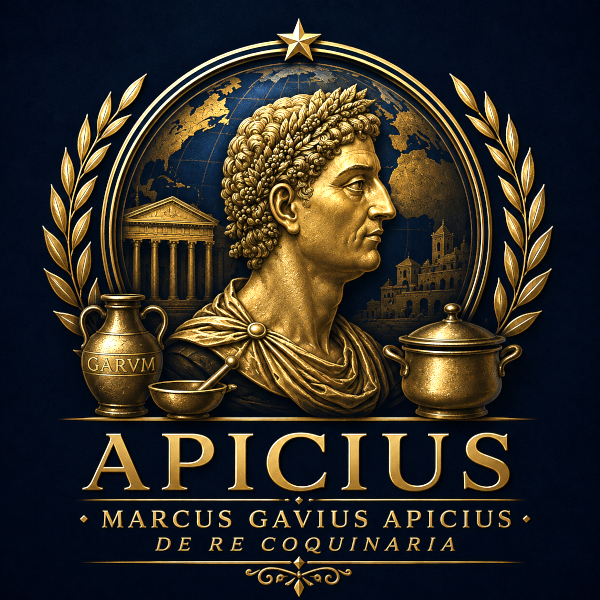
And this is where Marcus Gavius Apicius enters the kitchen.
Gourmet, lover of luxury and a man suspended somewhere between history and legend, his name became associated with De re coquinaria, the most important surviving source on the cuisine of ancient Rome.
Apicius, it must be said, was not precisely the sort of gentleman who would open the refrigerator and announce:
“Let’s see what was left over from yesterday.”
He was a man of banquets, extravagance, contested fish, spices, honey, reduced must and, above all, garum — the fermented fish sauce Romans scattered over their food with an enthusiasm approaching religious conviction.
Today, one suspects, he would have his own television programme, three restaurants, a range of luxury condiments and several million followers on social media.
But the modern polpettone had yet to be born.
For that, history would have to wait.
In the fifteenth century, Maestro Martino used the word polpetta in his Libro de Arte Coquinaria, although what he described was closer to a roll of beaten meat than to the minced-meat ball familiar to us today.
Between the seventeenth and eighteenth centuries, matters finally began to take the proper shape. Writers such as Vincenzo Tanara and Antonio Latini increasingly brought minced meat into the picture. The piccatiglio helped pave the way for the transformation.
And then, in the nineteenth century, it arrived.
The polpettone.
Large, substantial and magnificently democratic.
Not merely an overgrown meatball, but almost a domestic philosophy.
Its real genius, after all, lies not only in its flavour. It lies in that particularly Italian art of looking at what happens to be available — meat, bread, eggs, cheese, herbs, perhaps yesterday’s leftovers — and persuading every ingredient that, in the company of the others, it is entitled to a considerably more distinguished second life.
Then came Pellegrino Artusi, who in 1891, in Science in the Kitchen and the Art of Eating Well, effectively granted it a title of nobility:
“Signor Polpettone.”
And quite right too.
Few dishes have enjoyed such remarkable social mobility.
Born partly from the sensible determination not to waste what remained from another meal, it became one of the great symbols of Italian family cooking.
A cuisine which, long before anybody invented the word sustainability, understood perfectly well that stale bread was not useless bread, leftover meat did not belong in the bin, and a half-empty refrigerator could still contain the beginnings of a memorable dinner.
The polpettone, therefore, is also a small lesson in domestic economics.
Not the sort taught at university, naturally.
The more difficult sort.
The sort taught by grandmothers.
But after two thousand years of gastronomic history, a small incident recently occurred that deserves to be entered — perhaps in modest type — into the annals of international relations.
A British diner tasted polpettone.
He was enchanted.
Now, without wishing to turn a dinner among friends into a diplomatic summit, one must admit that this is not an insignificant achievement.
Italians and Britons have spent centuries discussing empires, trade, the Mediterranean, Europe, football, tea, pasta, Brexit and even the proper way to make coffee.
Yet place a good slice of polpettone before them and international disputes suddenly seem rather less urgent.
No treaties.
No interpreters.
No press conference.
Just a second helping.
Apicius, accustomed to the excesses of Imperial Rome, might have considered our polpettone a little too modest. He would probably have demanded an improbable sauce, a fish brought from the furthest reaches of the Empire and a frankly indecent quantity of garum.
Artusi, on the other hand, would probably have smiled.
Because Signor Polpettone continues to do exactly what it has always done best: take humble ingredients, bring them together and turn them into conviviality.
And if, after Persians, Romans, Renaissance cooks, Italian grandmothers and generations of families, it has now managed to seduce a British palate as well, we may safely consider the matter settled.
Italian cuisine has secured another international victory.
Without invading anyone.
All it took was turning on the oven.
© 2026 The Chronicler of the Table – All rights reserved
© 2026 SalaStampa.eu, world press service – All Rights Reserved – Guzzo Photos & Graphic Publications – Registro Editori e Stampatori n. 1441 Turin, Italy