
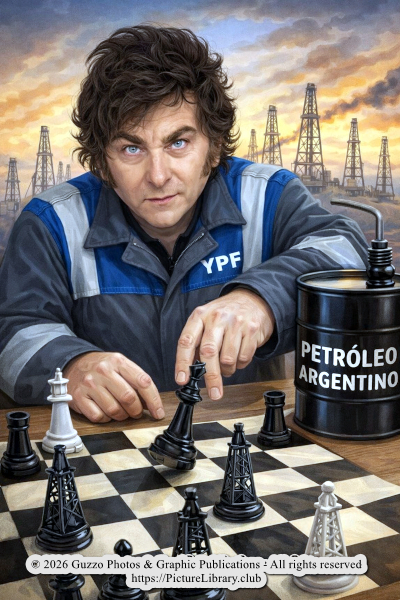
In a move as symbolic as it was calculated, Javier Milei appeared in Spain wearing a YPF coverall. It was no wardrobe accident, nor just another eccentric gesture—it was a statement.
Argentina wants to sell oil. And it wants to do it now.
Far from being anecdotal, the image fits into a broader strategic narrative: positioning the country as a reliable energy supplier in a world increasingly shaped by geopolitical tensions. Especially in sensitive zones like the Strait of Hormuz, where any spark can shake global markets.
In that context, Vaca Muerta becomes more than a geological formation—it turns into a geopolitical card.
The implicit message is simple and powerful: while the Middle East remains entangled in its own conflicts, Argentina offers stability, predictability, and resources.
No missiles. No naval blockades. No threats to critical routes.
Yet the scene also raises questions. Is this merely political marketing, or is there a structured plan behind the promise?
Because selling oil is not just about having reserves. It requires infrastructure, agreements, logistics—and above all, trust.
The coverall, then, acts as both symbol and challenge.
Argentina is not only competing with barrels—it is competing with credibility.
And in that arena, recent history weighs as much as what lies underground.
Meanwhile, the image circulates. And like any good political snapshot, it fulfills its role: installing an idea before delivering results.
Let the world take note.
Because if oil flows without passing through Hormuz, it will not just be an energy alternative.
It will also be a geopolitical move.
✍️ ©2026 The Exporter of the Future – All Rights Reserved
© 2026 SalaStampa.eu, world press service – All Rights Reserved – Guzzo Photos & Graphic Publications – Registro Editori e Stampatori n. 1441 Turin, Italy